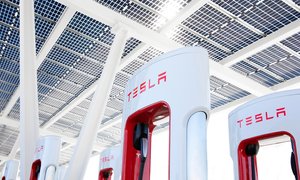
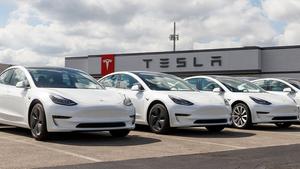
Tesla, Inc. is a leading electric vehicle manufacturer that designs, produces, and sells a range of electric cars and energy products. The company is known for its innovative approach to sustainable transportation, producing models that are not only environmentally friendly but also equipped with cutting-edge technology and high-performance features. In addition to its automotive division, Tesla also focuses on renewable energy solutions, including solar energy products and energy storage systems, aimed at accelerating the world’s transition to sustainable energy. Through its global presence and dedicated infrastructure, such as an extensive network of charging stations, Tesla seeks to revolutionize the automotive industry and promote a greener future. Read More
Tesla's premium price tag doesn't reflect its automotive reality, while the memory-chip maker is undervalued relative to its powerful position in the AI infrastructure build-out.
Lucid could prove a big winner for investors willing to accept that the company could also go bankrupt. Here are four critical projects for investors to keep an eye on while gauging if the young EV maker's turnaround hopes are realistic.
Rivian's record Q3 delivery beat lifted shares early before investors refocused on unchanged guidance and the Oct. 29 earnings call, today, Oct. 2, 2026.
What Happened? Shares of electric vehicle manufacturer Rivian (NASDAQ:RIVN) fell 3.3% in the afternoon session after the company kept its full-year delivery ...
What Happened? Shares of electric vehicle pioneer Tesla (NASDAQ:TSLA) jumped 5.2% in the afternoon session after the company reported third-quarter 2026 vehi...
A stock with low volatility can be reassuring, but it doesn’t always mean strong long-term performance. Investors who prioritize stability may miss out on hi...
“You get what you pay for” often applies to expensive stocks with best-in-class business models and execution. While their quality can sometimes justify the ...